
Blog
March 15, 2026
Designing Resilient 5G & WISP Infrastructure: Surge and EMI Protection from Ground-to-Antenna
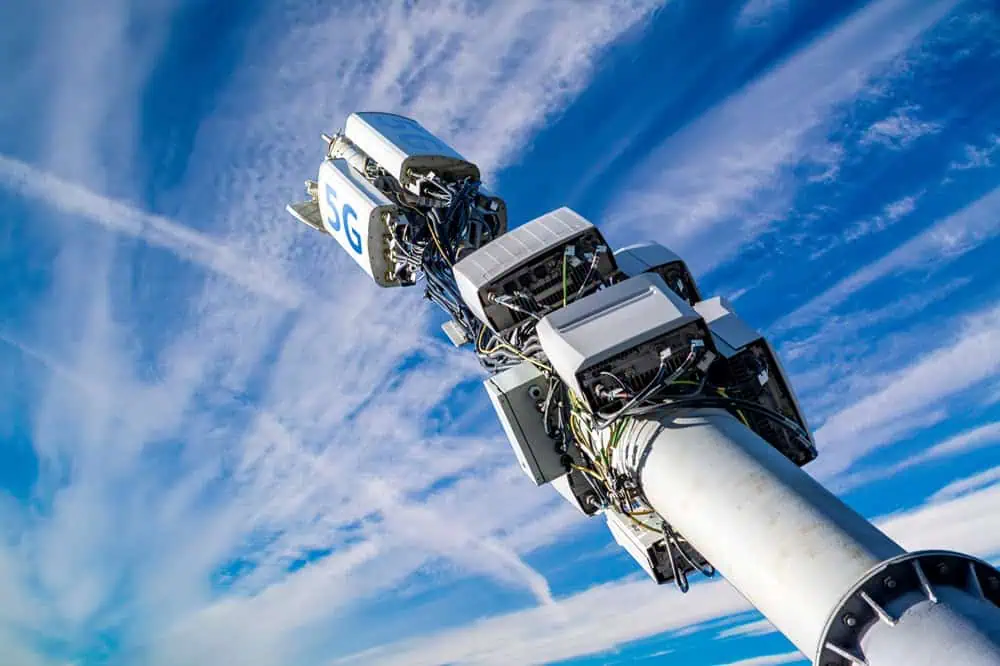
Wireless communications infrastructure is expanding at an unprecedented rate. 5G deployments, Wireless Internet Service Provider (WISP) networks, and distributed mesh architectures now support broadband access, industrial IoT connectivity, remote operations, and critical public services. These systems rely on elevated antennas, tower-mounted radios, rooftop equipment, and widely dispersed nodes to deliver high-speed connectivity across urban and rural environments alike.
Because much of this infrastructure operates outdoors and at elevation, it is inherently exposed to lightning-induced surges and electromagnetic interference (EMI). From the grounding system up through the RF feed line and antenna interface, every connection point represents a potential entry path for destructive transient energy. Designing resilient wireless networks requires a protection strategy that safeguards equipment, preserves signal integrity, and maintains uptime across the entire installation.
Why Surge and EMI Protection Is Critical for Wireless Telecom Networks
Modern 5G and fixed wireless systems depend on highly sensitive RF front ends, power amplifiers, and baseband electronics. These components are optimized for performance and efficiency, but that sensitivity makes them vulnerable to transient overvoltage events and conducted or radiated interference. Even brief disturbances can degrade throughput, increase packet loss, or trigger system resets.
Threat sources are varied. Direct lightning strikes pose obvious danger, but indirect strikes can be equally disruptive. Ground potential rise, inductive coupling into tower structures, switching transients from nearby power systems, and emissions from adjacent RF transmitters all contribute to a challenging electromagnetic environment.
The consequences of insufficient protection extend beyond component damage. Equipment replacement, maintenance calls, service outages, and SLA penalties can significantly increase operational costs. For WISP operators and telecom providers alike, protection is an essential design feature for network reliability and long-term profitability.
Lightning Threats and RF Feed-Line Vulnerabilities
Lightning energy does not need a direct strike to cause damage. Electromagnetic coupling can inject surge energy into antennas, masts, and tower structures. From there, coaxial feed lines frequently act as a primary conduit for surge currents entering radios, baseband units, and associated network equipment.
RF feed lines are particularly vulnerable because they serve as both signal pathways and potential surge entry points. Without proper mitigation, high-energy impulses can travel down the coax and reach sensitive electronics within microseconds.
In addition to high-energy surge events, lower-level EMI can gradually degrade system performance. Increased noise floors, reduced receiver sensitivity, and intermittent performance anomalies may occur long before catastrophic failure. Effective protection must therefore address both large transient events and ongoing interference exposure.

Coaxial Surge Arrestors: First-Line Defense at the Antenna Interface
Coaxial lightning arrestors provide a direct means of diverting surge energy to ground while maintaining RF signal continuity. Installed inline with the feed line, these devices are designed to conduct high transient currents away from radios and network electronics without compromising normal operation.
Key performance factors include frequency compatibility across relevant 5G and fixed wireless bands, low insertion loss to preserve signal strength, and high return loss to minimize reflection. Fast response time and adequate surge current handling capacity are equally important in high-exposure installations.
Placement and grounding determine effectiveness. Surge arrestors should be installed close to the antenna or at building entry points, with short, low-impedance grounding paths. Proper bonding ensures that diverted surge energy is safely dissipated rather than redirected into downstream equipment.
EMI Filtering for Wireless Telecom Equipment
While surge arrestors address high-energy events, EMI filters mitigate conducted noise on power and signal lines feeding wireless infrastructure. Radios, amplifiers, and network control equipment generate internal switching noise that can couple into sensitive circuits or radiate outward if not properly suppressed.
Wireless telecom EMI filters attenuate unwanted frequencies while preserving DC power delivery and system efficiency. Broadband attenuation across relevant frequency ranges helps maintain clean power rails and reduces susceptibility to external interference sources.
By integrating EMI filtering at power entry points and subsystem interfaces, operators can reduce noise-related performance degradation and improve overall network stability.
Design Considerations for 5G, WISP, and Mesh Network Deployments
Wireless infrastructure presents unique environmental challenges. Equipment may be exposed to wide temperature swings, moisture, vibration, wind loading, and space constraints within enclosures. Protection components must be rated for outdoor telecom applications and long-term reliability.
Selecting surge and EMI protection solutions that are compatible with telecom frequency bands and RF connector types is critical. Devices must support required bandwidths without introducing excessive signal loss or reflection.
As networks densify to support higher data rates and expanded coverage, protection strategies must scale accordingly. Each additional node or antenna increases potential exposure points, making consistent ground-to-antenna protection architecture essential.
NexTek Protection Solutions for Wireless Communications Infrastructure
NexTek provides a portfolio of surge protection and EMI filtering solutions engineered for wireless telecom applications. Coaxial surge arrestors are designed to handle high surge currents while maintaining low RF signal impact across broadband frequency ranges. High-performance EMI filters support effective conducted noise suppression without compromising power delivery.
These solutions are built for ruggedized operation in outdoor and elevated environments, supporting installation at ground-level equipment shelters, tower-mounted radios, and antenna interfaces. By addressing protection requirements from grounding systems through RF feed lines, NexTek enables comprehensive mitigation strategies that enhance reliability and network resilience.
Building More Resilient Wireless Networks from the Ground Up
Reliable 5G, WISP, and mesh networks depend on more than coverage and throughput. They require a protection architecture that anticipates lightning exposure, transient disturbances, and EMI across every segment of the installation.
A holistic approach — from grounding systems and power entry points to coaxial feed lines and antenna interfaces — reduces downtime, protects capital equipment, and preserves signal integrity. By integrating surge arrestors and EMI filters into the design phase, telecom operators can strengthen infrastructure resilience and support high-availability wireless services.
Explore NexTek surge and EMI protection solutions for wireless telecom infrastructure, or connect with a NexTek engineer to discuss application-specific protection strategies.
More Company News


Get A Free Quote
Or Call 978-486-0582