
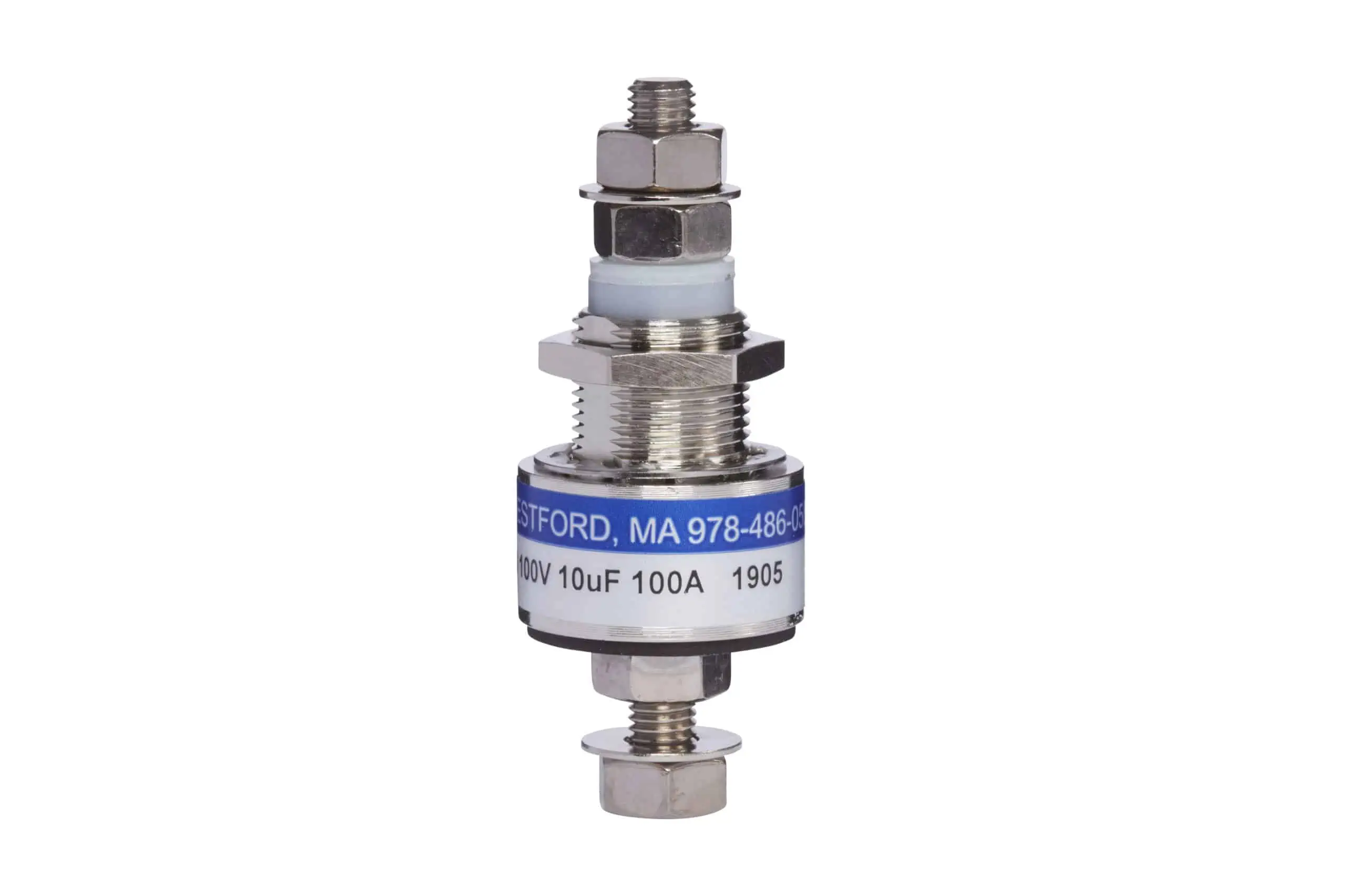
HPR High Current EMI Feedthrough Filters for Industrial and Military Applications
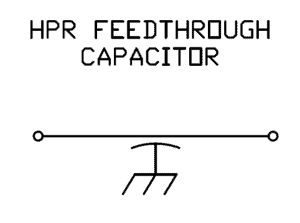
The NexTek HPR Series of High Current Feedthrough EMI/RFI filters are designed to solve EMI and EMC problems in demanding high-current applications.
NexTek filter designs utilize advanced design principles to effectively decouple the filtering capacitance from the filter main body. This means that HPR Series filters are extremely robust and designed to withstand the harshest shock, vibration, and temperature requirements while maintaining their high-performance characteristics.
HPR Series filters are available in a wide range of capacitance values and voltage ratings, for applications from 35A of RMS current up to 400A+.
Connector Types
N/A
Frequency Range
- Available between 50 – 400 Amps
Threat Types
- HEMP
- NEMP
Design Highlights
- Extremely Compact Design – Great for Tight Packaging Requirements
- Rugged & Robust – Ideal for Extreme Environments
- High Performance – >60dB of Filtering to 1GHz+
Applications for HPR High Current EMI/RFI Filters
HPR high current EMI/RFI filters are used in power systems where conducted noise, high current levels, and demanding operating conditions can create EMI/EMC challenges.
HPR Series filters are currently used around the world as part of industrial laser systems, multiple electric and hybrid vehicle designs, and power conversion applications related to civilian and military systems.
Common applications include:
- Industrial laser systems
- Aerospace and aviation
- Military, government, and homeland security
- Electric and hybrid vehicle platforms
- Medical imaging systems
- Telecom and wireless supply filtering
How to Select the Right High Current EMI Filter for Your Power System
The best high current EMI filter for your application is the one that balances filtering performance, electrical ratings, mechanical fit, and operating environment. For HPR Series filters, engineers should evaluate the following key factors before selecting a configuration:
- Current rating: Match the filter to the current level in amps, with HPR options available from less than 50A to 400A+ rated, with custom options possible.
- Voltage level and power type: Confirm the voltage level and whether the system uses AC or DC power.
- Capacitance value: Review available capacitance options based on the desired filtering performance and part number requirements.
- Cut-off frequency/filtering performance: Evaluate the noise frequencies being controlled and the filter capacitance needed to support the required attenuation.
- Capacitance tolerance: Confirm the required tolerance code for the application.
- Reliability requirements: Determine whether the HPR E-Series is appropriate for harsh shock, vibration, or high-availability applications.
- Installation requirements: Review mounting configuration, torque recommendations, grounding, temperature, current, and voltage limits before finalizing the filter choice.
If you need additional assistance making your selection, or the application requires a configuration outside the standard HPR Series offerings, contact the NexTek engineering team.
You can also refer to the High Current Filter Selection Guide (PDF).
Why Choose HPR Feedthrough EMI Filters?
HPR Series filters combine compact C-type feedthrough construction with rugged high-current EMI/RFI filtering performance for demanding AC and DC power systems. HPR advantages include:
- High-frequency filtering to 1GHz+
- Shock and vibration resistance
- High-torque capable electrodes
- Constant filtering as current changes
- Compact C-type feedthrough construction
- Wide selection of current ratings, capacitance values, and voltage ratings
HPR High Current EMI Filter Recommended Products
NexTek offers HPR Series filters across multiple current, capacitance, tolerance, voltage, thread, and reliability configurations to support a range of high-current EMI filtering requirements.
- Inch thread configurations for rugged, compact filtering: HPR050 | HPR100 | HPR175 | HPR250
- Metric thread configurations for higher voltage ratings and harsh shock/vibration environments: HPR055 | HPR140 | HPR400
- Next Generation ultra-compact configuration: HPR300
- Extreme Environment/High-Rel applications: HPR-E Series options with additional burn-in, screening, and military or customer-specific requirements
Related Information on HPR High Current Filters
- EMC/EMI Filters Catalogue (PDF): Explore NexTek EMI/EMC filter product families, custom filter capabilities, testing services, typical applications, and quality and manufacturing standards.
- High Current Filter Selection Guide (PDF): Compare HPR Series current ratings, voltage ranges, capacitance options, cut-off frequency considerations, E-Series options, and part number selection guidance.
- High Current Filters – HPR Series Installation Guide (PDF): Reference HPR Series mounting configuration, torque recommendations, safety tips, and installation guidance for properly integrating high current feedthrough filters.
- Designing Resilient 5G & WISP Infrastructure: Surge and EMI Protection from Ground-to-Antenna: Review protection strategies that safeguard equipment, preserve signal integrity, and maintain uptime across entire wireless network installations.
- NexTek Technical Resources Library: Explore additional application notes, white papers, and technical downloads for EMI and EMC protection solutions.
FAQs
What is a high current EMI filter?
A high current EMI filter is designed to reduce unwanted high-frequency noise on power lines carrying elevated current levels. NexTek HPR Series high current feedthrough filters are designed to remove high-frequency noise from very high current lines, with options rated up to 400A+.
How does a feedthrough EMI filter work?
A feedthrough EMI filter passes high current through a shielding enclosure while helping shunt high-frequency noise to ground. In high-current power systems, this filtering approach helps reduce conducted interference before it can affect sensitive electronics or contribute to emissions and susceptibility issues.
What industries use high current EMI filters?
High current EMI filters are used across medical and industrial lasers, intelligent power supplies and controllers, telecom and wireless power supply filtering, medical imaging devices, mobile land, sea, and aerospace power filtering, emissions and susceptibility compliance, automotive and EV markets, computer servers, industrial laser systems, electric and hybrid vehicle designs, and civilian or military power conversion applications.
Can HPR EMI filters be customized?
Yes. NexTek can design, engineer, and manufacture custom EMI filters to suit specific application requirements, including frequency range, current rating, voltage rating, capacitance, operating temperature, mounting configuration, and applicable test or compliance needs.
If a standard HPR configuration does not fully align with your system, contact NexTek to discuss modified or custom options.
Get A Free Quote
Or Call 978-486-0582