
Blog
February 17, 2026
Why Some COTS Surge Arrestors Are (or Aren’t) Suitable for Military Environments
In today’s defense and aerospace sectors, programs are under constant pressure to shorten development cycles, reduce procurement costs, and get systems into the field faster. Against this backdrop, there is a growing movement toward leveraging commercial off-the-shelf (COTS) components to speed integration and cut expenses.
Yet, when it comes to electromagnetic protection — particularly surge arrestors — the question remains: can standard commercial devices truly perform under the extreme demands of military environments? The answer lies in understanding the differences between commercial-grade and mission-critical performance, and where modified approaches like COTS+ enter the equation.
What Makes Military Applications Unique?
Military platforms operate in some of the harshest and most unpredictable environments on the planet — and above it. These systems must function across wide temperature ranges, endure persistent vibration, and survive repeated exposure to lightning, static discharge, and radio frequency (RF) interference from other systems.
The regulatory landscape reflects this rigor. MIL-STD-461 governs EMI emissions and susceptibility for military systems, while RTCA DO-160 outlines environmental testing for airborne electronics. Passing these standards is non-negotiable for aviation, naval, and ground systems alike.
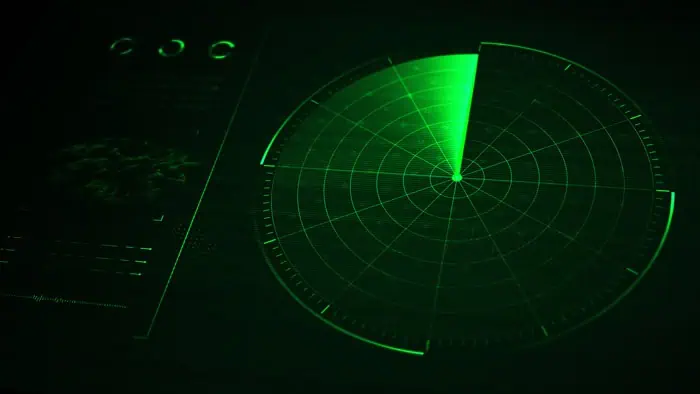
In many cases, the consequences of failure are severe. A surge that interrupts communications or scrambles navigation can jeopardize an entire mission. From radar systems to avionics and communications links, the stakes are high — and so are the expectations for surge protection.
Where COTS Solutions Fall Short
Commercially available surge arrestors offer broad performance and ease of access, but they are typically not designed for the battlefield. Most lack the durability or environmental sealing required for high-vibration, high-altitude, or rapid thermal cycling scenarios.
Key limitations include:
- Temperature tolerance: COTS units may not maintain performance across the extreme heat and cold encountered in flight or combat zones.
- Mechanical ruggedness: Vibration and shock requirements for military systems often exceed the design specs of standard commercial components.
- Environmental protection: Without proper sealing or coatings, arrestors may degrade in humid, salt fog, or corrosive environments.
- Lack of traceability or documentation: COTS devices often lack the testing reports or compliance records required for defense program validation.
For many mission-critical applications, these gaps are too large to overlook.
What COTS+ Looks Like – Customizing for the Mission
Rather than abandoning COTS entirely, many defense contractors and integrators are turning to a hybrid approach: COTS+. This strategy begins with a commercially proven component and modifies it to meet mission-specific requirements.
This approach bridges the gap between commercial availability and military performance. Common enhancements include:
- Ruggedized enclosures to withstand mechanical abuse.
- Custom mounting solutions for shock resistance and layout integration.
- Hermetic sealing to block out moisture and contaminants.
- Extended voltage or surge ratings to accommodate platform-specific power conditions.
- Full qualification testing to meet MIL-STD or DO-160 benchmarks.
By customizing the most critical elements, program teams can meet performance, cost, and timeline goals—without reinventing the wheel.

Success Criteria – When a Modified COTS Arrestor Works
The NexTek COTS+ approach has demonstrated real-world success under demanding conditions. When a leading defense contractor needed a drop-in replacement for an obsolete EMP protection module — one critical to air defense communication systems — NexTek delivered 125 qualified units in just six months, beating the industry’s typical 12–18-month timeline.
Rather than designing a custom diode from scratch, NexTek implemented a proprietary screening process using commercial components to meet mil-spec performance. The final design not only met environmental and EMI standards but also improved electrical performance and form factor compatibility.
The project’s success led to long-term production commitments and proved the concept of COTS+ as a fast, reliable strategy for legacy system modernization and rapid deployment.
In general, a modified COTS approach is particularly effective for:
- Non-frontline or moderate-risk systems where some environmental tolerance can be traded for speed or cost.
- Development platforms or prototypes where faster time-to-deployment matters.
- Subsystems with lower exposure to EMI threats, but which still need tested protection.
Success hinges on documentation: traceability, performance data, and test reports remain critical for program approval. Without these, even the most robust modified arrestor may be excluded from consideration.
The NexTek Approach to COTS+ Surge Arrestors
At NexTek, we specialize in bridging the commercial-to-military gap with surge arrestor solutions built on proven core designs and tailored through application-specific engineering. Our COTS+ offerings combine:
- Field-proven technologies including gas discharge tubes (GDTs) and hybrid architectures.
- Military-grade qualification support including MIL-STD-461 and DO-160 testing guidance.
- Custom enhancements such as mechanical upgrades, extended specs, and custom labeling or compliance documentation.
Many of our baseline products already support EMI suppression and lightning protection in RF-critical environments. Our COTS+ parts have helped defense contractors to keep their legacy systems in the field. As economical and robust solutions, NexTek semi-custom arrestors are well-positioned to meet military expectations with minimal modification.
Optimizing Military Readiness with COTS+
While pure COTS solutions may fall short in some areas, COTS+ represents a strategic middle ground — allowing military systems to meet procurement speed and cost targets without sacrificing performance or compliance. With the right enhancements and documentation, commercial surge arrestors can evolve into robust, mission-ready components.
Explore NexTek COTS+ surge protection solutions built to meet your military performance requirements with commercial speed and value. Need assistance? Discuss your project with NexTek experts.
More Company News

Get A Free Quote
Or Call 978-486-0582